For years, logistics networks were optimized for cost. Today, geopolitical tensions, tariffs, customer expectations, sustainability targets, and supply disruptions require a different balance between cost, service, and resilience. A network that performed well five years ago may no longer support tomorrow's business.
The automotive industry illustrates this shift. Volvo increasingly follows a "build where you sell" strategy, BYD is localizing production in Europe, and Geely is expanding European manufacturing capacity. Similar decisions are being made across many industries as companies redesign their logistics footprint to reduce risk while supporting growth.
More than warehouse locations
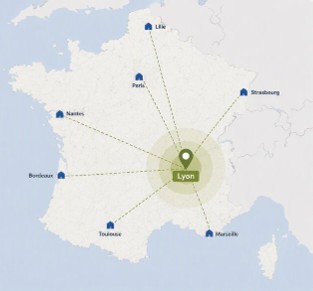
Logistics network design determines where products are manufactured, stored, and distributed, how inventory is positioned, and how transportation flows support customer demand. Every network is a trade-off between cost, service, resilience, and sustainability. The challenge is no longer finding the cheapest network, but the one that best supports your business strategy.
From assumptions to informed decisions
Rather than reacting to disruptions, organizations should periodically evaluate whether their logistics network is still fit for purpose by analyzing alternative network scenarios. Questions such as regional versus centralized distribution, inventory positioning, production footprint, transport strategy, and sourcing locations can be assessed objectively using data, quantitative modelling and scenario analysis.
A structured approach to turn supply chain data into quantified scenarios and clear business decisions typically consists of four phases:

1. Engage
Define the future requirements and objectives of the network by determining the strategic objectives, project scope, governance, and success criteria. Clear design principles, constraints, and Key Performance Indicators (KPIs) ensure the analysis focuses on the business decisions that matter over the next 5 to 10 years.
2. Understand
Build a fact-based view of the current network. Relevant data is collected, structured, and validated across customer demand, product flows, transportation costs, inventory, service performance, facility utilization, and CO₂ emissions. This data feeds the logistics network simulator, creating a digital representation of the current network. Demand heat maps, point-of-gravity analyses, and 5 to 10-year demand projections provide insight into how well the current footprint supports growth and evolving business requirements. The result is a robust, data-driven baseline that identifies the current network performance and provides the foundation for objective scenario evaluation.
3. Shape
Evaluate and optimize future network scenarios. Building on the digital network model, a focused set of future-state scenarios is developed, simulated, and compared against projected demand. Alternative facility locations, distribution models, inventory positioning, transport flows, sourcing strategies, and capacity requirements can be modelled and stress-tested before significant investments are made. Rather than relying on assumptions, each scenario is supported by quantitative analysis and compared across cost, service, capacity, inventory, resilience, and sustainability. The result is an objective basis for selecting the network design best suited to support long-term growth and strategic business objectives.
4. Validate
Translate the preferred network scenario into an actionable roadmap. The strongest network scenarios are evaluated not only on quantitative performance, but also on operational feasibility, investment requirements, implementation complexity, and business risk. The preferred scenario is translated into a clear business case and implementation roadmap, defining what should change, the value it will create, the required investments, and the steps needed to realize it. Supported by measurable KPIs and clear implementation priorities, the result is a data-backed blueprint for a future-ready logistics network that enables resilient and profitable growth.
Put your logistics network to the test
A resilient logistics network is no longer just a competitive advantage, it is becoming a prerequisite for profitable growth. If your logistics network has not been reassessed in recent years, now is the time. Before committing to a new warehouse, production location, sourcing strategy, or major network change, use your data to simulate the alternatives and quantify the impact. A structured network design assessment provides the insights needed to make confident decisions on network footprint, inventory, transportation, and future growth.
Ready to test your logistics network for future-readiness? Contact us today to assess your current footprint, simulate future scenarios, and identify the network design that best supports your growth ambitions and business strategy.
Contact one of our experts
